Translation Earbuds for Language Learning
By Mark Fulton · September 17, 2026
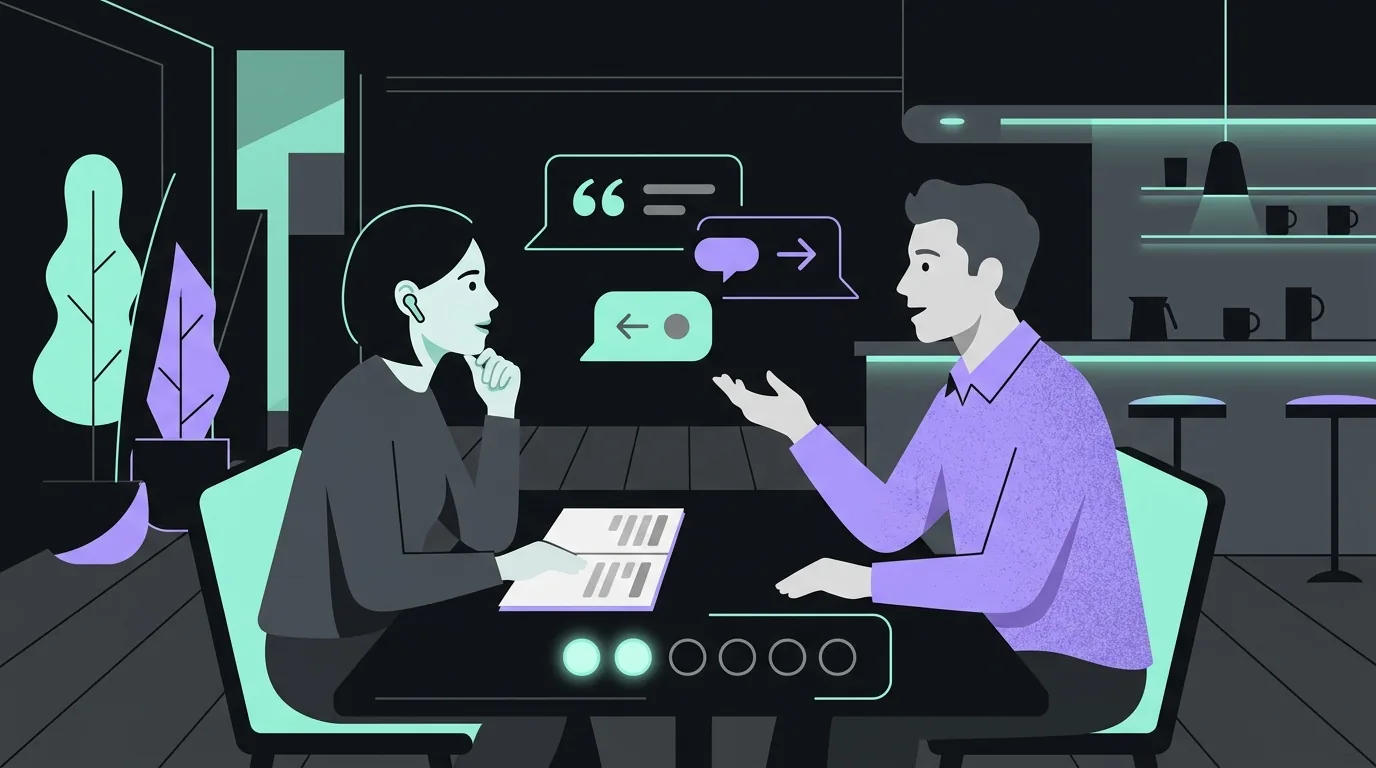
Translation earbuds will not teach you a language, and if you let them do the talking they will slow you down. The skeptics are right about that. But there is a narrow, real use for a learner: a live translator can keep you inside a conversation that is slightly beyond your level, the kind you would otherwise cut short. That conversation is exactly the practice you need. The discipline is simple. Never look at the translation first. Try to understand, ask for a repeat, commit to a guess, and only then check. Used that way, translation is a rescue net during the conversation and an answer key after it, not a replacement for your own ears.
I sell translation earbuds and a browser translation app, so read this with that in mind. On its own, a device does not help you learn faster. This post is about the conditions under which it helps at all.
Does translation help or hinder learning?
Mostly it hinders, if you use it as designed. A translator exists to remove effort, and learning runs on effort: straining to follow a sentence, reaching for a word you half know, getting it wrong and noticing.
The linguist Stephen Krashen has long argued that we acquire language by understanding messages, not by memorizing rules. In Principles and Practice in Second Language Acquisition, which he hosts in full on his own site, he describes the best methods as those that supply comprehensible input in low anxiety situations, with the learner focused on meaning. The word doing the work is understanding. You have to be the one who understands.
That is where a translator goes wrong. If a sentence arrives already in your own language, you understood the message, but not the Spanish.
Classroom guidance points the same way. The American Council on the Teaching of Foreign Languages recommends that teachers and students use the target language as exclusively as possible, 90% plus, at every level of instruction. A device translating everything back into English is the opposite of that.
So a translator used continuously is a crutch. Anything useful comes from using it less, and more deliberately.
What is the one thing it genuinely gives a learner?
Staying power. The conversation doesn't end.
Every learner knows the moment. Someone answers your careful question with a fast, long reply. You catch a third of it, nod, and find a reason to leave. The best practice of your week is over after two turns.
Krashen makes a related point in the same book: early attempts to speak, even ones that lean on the patterns of your first language, let a learner participate more in conversation, and that brings in more input. A translator in rescue mode keeps you in the conversation. You follow what you can on your own, and when you are genuinely lost you get the gist and carry on. You spend twenty minutes hearing real speech instead of ninety seconds.
It also takes some of the fear out. For a lot of learners, nerves keep them out of speaking practice altogether, and a net makes it easier to start.
How do you use it without leaning on it?
Treat the translation as something you earn, not something you receive.
The say it, then see it rule. You may look at, or listen to, the translation at only two moments:
- During the conversation, after two honest attempts. First, ask the other person to repeat or slow down, in the language you are learning. Second, commit to your best guess of what they said, even silently. Only then check. If your guess was right, you confirmed something you knew. If it was wrong, you know exactly where the gap was.
- After the conversation, after you write from memory. Before you read anything back, jot down what you think was said and the words that tripped you up. Then compare.
Never look first. Looking first skips the one part that does the teaching.
There is research behind the guessing. In a study published in Science, Jeffrey Karpicke and Henry Roediger had students learn foreign language vocabulary and found that repeated testing after learning had a large positive effect on delayed recall, while repeated studying had none. The students' own predictions of how they would do were unrelated to how they actually did. Reading the translation is studying. Guessing first is testing.
Two habits make the rule easier to keep:
- Phone face down, or audio only. If text is glowing on a screen next to you, you will read it. Put it where looking takes a decision.
- Tell your partner what you are doing. "I'm learning, so I'll ask you to repeat before I check" gets you patience and slower speech, which is worth more than any app.
A note on our own browser app, since it affects the review step. While a session runs, AI Translation Live shows a running text log of the translated lines and marks where the conversation switched direction. The log shows the translation, not the original words, so it tells you what was said rather than exactly how. It exists only in that open browser tab, so do your review before you close it. For where the audio goes and why there is a short delay, how translation earbuds actually work covers the whole pipeline.
What does a review-only routine look like?
Here is a week built around the rule. Live translation appears on three days out of seven, and never as the first thing you reach for.
| Day | What you do | Translation | When you may look |
|---|---|---|---|
| Monday | Listening: a show, podcast or video you mostly follow, on something you enjoy | Off | Never |
| Tuesday | A real conversation with an exchange partner or friend, translator running as a rescue net. Straight after: write recall notes, then read the log | On, face down | After two attempts during; after your notes afterward |
| Wednesday | Retrieval: from your notes only, rebuild the phrases you needed and test yourself on them | Off | Only to check an answer you've already written |
| Thursday | Speaking check: say three to five sentences you wanted to say on Tuesday, in the language you are learning, with the output set to your own language. Predict what should come back first | On | After each sentence is finished |
| Friday | A second conversation on similar topics. Count your rescues and aim for fewer than Tuesday | On, face down | After two attempts during; after your notes afterward |
| Saturday | Listening again, ideally related to Friday's topics | Off | Never |
| Sunday | Rest, or light reading for pleasure | Off | Never |
Thursday's check is rough, and that's fine. If the translation comes back as what you meant, a listener would probably have followed you too. If it comes back garbled, your pronunciation, word choice or word order is worth a closer look. A machine is not a grader, though. It can understand things a person wouldn't, and miss things a person would get, so treat a mismatch as a question for a tutor, not a verdict.
The rescue count is your progress measure. Write it down after each conversation. A falling number of rescues, in conversations of similar difficulty, is a plain signal that you are improving.
Where do teachers use this well?
The strongest classroom use isn't in the language class at all.
Some school districts have bought translation earbuds for newcomer students who arrive speaking little of the school's language. The teacher wears one earbud, the student the other, and the student follows a science or history lesson in their first language while their English develops. Teachers in one New York district that did this stressed the social side: a student who can follow the lesson and join the discussion is less anxious. That is the rescue net at the scale of a school day.
In the language classroom itself, a translator runs against the grain. A teacher has better tools for making meaning clear: gestures, pictures, rephrasing, and checking understanding. Translation fits there only as review. Play a short exchange, have students write what they understood, and only then show the translation as the answer key. It is the same say it, then see it rule, applied to a class.
When should you turn it off entirely?
Sooner than feels comfortable. The clear signals:
- When you catch yourself waiting for it. If you've stopped straining to follow and are just waiting for the English, the device has become the conversation. Turn it off for the next one, even if it goes badly.
- When your rescue count is near zero. You've outgrown it for that kind of conversation. Keep it for harder ones.
- With a tutor. A good tutor adjusts their speech to your level as they go, which a translator can't. Paying for a tutor and then translating them wastes both.
- During listening practice and in class. Input you don't have to work for isn't doing its job.
- When the stakes are low. Ordering coffee, small talk with a neighbour, asking directions. Getting it slightly wrong is the practice.
Keep it on where being understood matters more than practising: a doctor's appointment, a landlord, a first dinner with your partner's parents. That last one is the subject of translation for couples and family, and the same idea holds there: learn the words that carry the most goodwill yourself, and let the device cover what you can't say yet.
Do you need earbuds at all for this? Often not. For a learner, a phone running a translator face down on the table does the rescue job, and translation earbuds vs a phone app lays out when earbuds earn their place. Our $69 earbud kit is for when you want the conversation in your own ear. AI Translation Live, our browser speech-to-speech app, is a $39 a year add-on with 5 hours of translation included, and it works with headphones you already own.
FAQ
Do translation earbuds help you learn a language?
Not directly. They don't teach vocabulary or grammar, and constant use skips the effort learning depends on. They can keep you in real conversations a little beyond your level and give you something to check yourself against afterward, if you try to understand first and look second.
Is using a translator cheating when learning?
Only if it replaces your own attempt. Checking after you've asked for a repeat and made a guess is like reading the answer key after a test. Looking before you've tried turns practice into sightseeing.
How do teachers use translation devices in class?
A strong use is for newcomer students in subject classes, who follow the lesson in their first language while learning the school's language. In a language class, where the goal is to stay in the target language, translation fits best as review: students write down what they understood, then see the translation as an answer key.
What's better, a translator or a tutor?
For learning, a tutor. A tutor adjusts to your level, notices your mistakes, and makes you produce the language, none of which a translator does. A translator is for conversations you need before you're ready. If you can only pay for one to learn, pay the tutor.
The fairest test is to try it. The demo on our home page runs in a phone browser with a short free session. Use it as a rescue net: say a sentence in the language you're learning, decide what you meant before you look, and only check the translation after.