Consecutive vs Simultaneous Translation, in AI Terms
By Mark Fulton ·
Last verified:
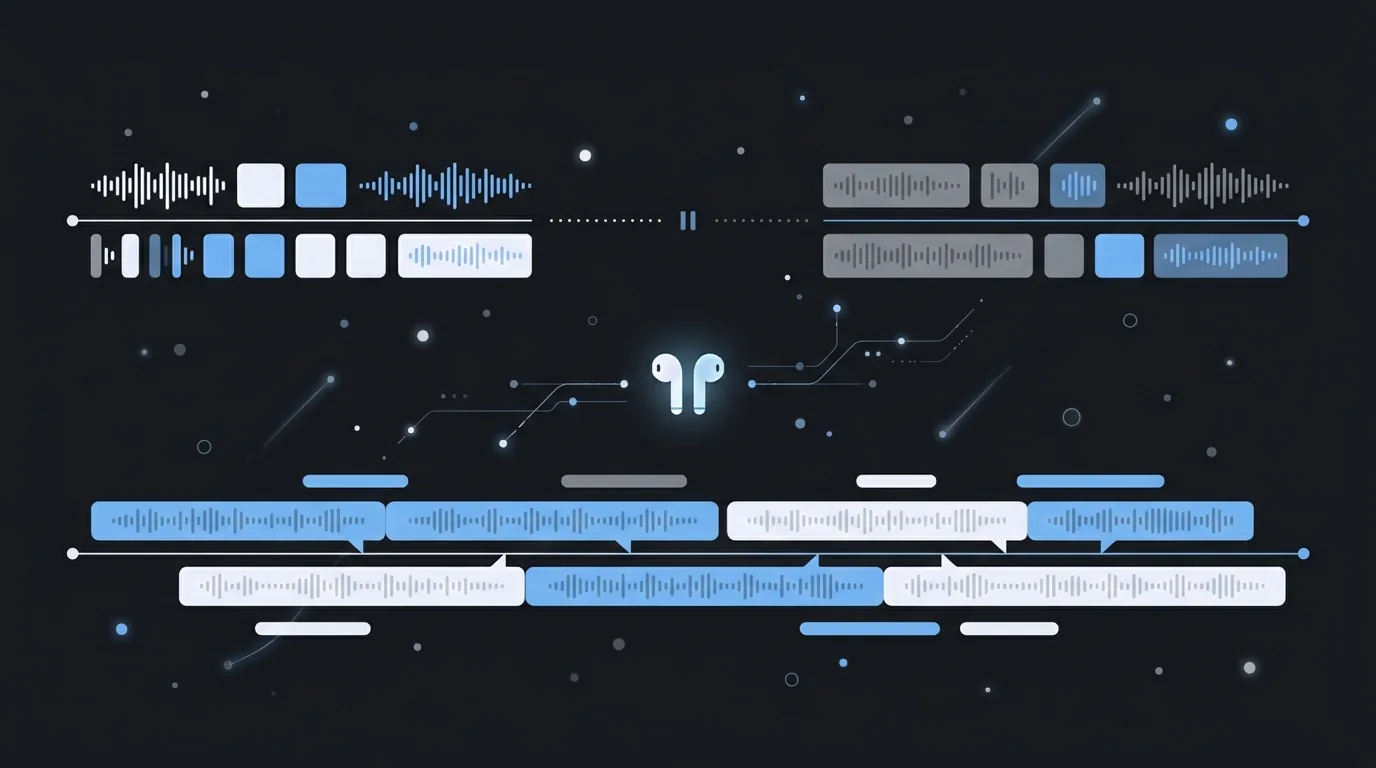
Consecutive means the translation starts after the speaker stops, so the conversation moves in turns. Simultaneous means the translation runs while the speaker is still talking, a few seconds behind. Human interpreters treat these as two different jobs with different training. Translation apps and earbuds use the same two words more loosely: "consecutive" usually means "talk, pause, hear it back", and "simultaneous" usually means a continuous translated voice with a short lag, not the booth-and-headset work a conference interpreter does. The practical difference is delay and interruption. Consecutive is slower per sentence but easier to follow and easier to correct. Simultaneous is faster overall but needs a patient listener and a quiet room.
I sell a translation earbud kit and a browser translation app, so I have a stake in how these words get used. The honest version is that the labels on a product page tell you very little until you know which behaviour sits behind them. This post gives the human definitions first, then what the software does, then a side-by-side timeline so you can see exactly where the delay goes.
If you want the delay broken into its technical stages, that is covered in what "real-time" translation actually means. If your question is who hears what when two people talk, see how two-way translation works. This one is the vocabulary and the trade-off.
What do the two interpreting terms mean for humans?
The European Commission's interpreting service publishes plain definitions. In consecutive interpreting, the speaker talks for a stretch while the interpreter takes notes, then the interpreter gives the message back in the other language once the speaker has finished. The interpreter usually stands or sits close to the speaker and takes a turn, like a second voice in the conversation.
In simultaneous interpreting, the interpreter reformulates the speech into the audience's language at the same time as the speaker is talking. They usually work from a booth with a headset, or from portable equipment, or by whispering directly into one listener's ear. The same page says the skills are the same as consecutive, with the difference that listening, structuring and speaking all happen at once, and that a good simultaneous interpreter has to anticipate what the speaker will say, especially when the two languages build sentences in very different orders.
That last point is the one worth holding onto, because it comes back when we talk about software. A human working simultaneously is making predictions about where a sentence is going before it arrives.
Two practical consequences follow for people:
- Consecutive roughly doubles the time a statement takes, because the message is said twice, once in each language.
- Simultaneous keeps the clock moving but demands intense concentration.
What do apps and earbuds mean by "simultaneous"?
Here the vocabulary gets loose. Consumer products borrow the two words for features, and there is no standard behind them. In practice you will meet three patterns.
Turn-based. You speak, you stop, the product detects that you have stopped, then it plays the translation. This is the consumer version of consecutive. Some products make you press something to mark the end of your turn. Others decide automatically that a pause means you are done.
Streaming. The product starts translating while you are still talking and plays audio a couple of seconds behind you. This is what most product pages call simultaneous or live mode. It is closer to whispered interpreting than to a booth, and it is a different thing from true human simultaneous work, because the software is not anticipating meaning the way a person does. It is processing a rolling window of recent audio.
Listening mode. One person wears headphones and hears a translation of someone else, such as a presenter, with no reply expected. Google documents this as a "Listening" mode in its Translate app, next to a "Conversation" mode where translations play out loud and people take turns speaking. That is a useful naming split: one mode is built for hearing, the other for talking.
Notice that none of the three is "simultaneous" in the booth sense. A feature called simultaneous mode on a consumer product is a streaming pipeline with a lag, and the quality of that lag decides everything.
Why is streaming translation hard to do well?
Because language does not arrive in the order you need it.
Take a verb. English puts the verb early in a sentence. Some languages put it at the very end. A person translating into one of those languages from English can say the subject and object while the speaker is still going, but may need to wait for the verb to finish the thought. A system that commits too early risks translating a sentence it has misunderstood. A system that waits for the end has effectively become consecutive.
Software handles this with a trade-off, not a trick:
- Wait longer and the translation is more accurate, but the lag grows.
- Commit earlier and the lag shrinks, but the system sometimes has to guess where the sentence is going.
Google's research team describes this exact problem in its write-up of a streaming speech translation model. It says older cascaded systems, which transcribe, translate and then synthesise in separate steps, commonly produced delays of 4 to 5 seconds that forced turn-based conversations, and that its newer end-to-end streaming model gets to about a 2-second delay. That is a research result from one lab, not a promise about any product you can buy, but it shows the shape of the problem. Four to five seconds pushes people into taking turns. Two seconds starts to feel like a person speaking behind you.
Notice what that means for the words themselves. A product that works in turns is not broken. It is honest about the fact that its delay is long enough that overlapping speech would be unintelligible.
What does each mode cost in delay?
Here is one 30-second statement shown three ways. The timings below are an illustrative worked example, not a measurement of any product, including mine. The only published figure used is the roughly 2-second streaming delay from Google's research, which I am treating as a reference point for what a good streaming system can do.
Speaker talks for 30 seconds. Where does the listener hear each part?

CONSECUTIVE (human, or turn-based app)
0s ---------------------------- 30s | 30s ------------- ~60s
 speaker talks                        | interpreter or app speaks
 listener hears: silence              | listener hears the full message
 First translated word:  after the speaker stops (about 30s in)
 Total time to finish:   about 60s  (the statement is said twice)

HUMAN SIMULTANEOUS (booth or whisper)
0s ------------------------------ 30s + a few seconds
 speaker talks
 interpreter speaks a short step behind, anticipating the sentence
 First translated word:  within the first sentence or two
 Total time to finish:   about 30s plus a short tail

AI STREAMING (the "simultaneous mode" in a product)
0s ------------------------------ 30s + ~2s
 speaker talks
 translated audio plays a couple of seconds behind
 First translated word:  a couple of seconds in
 Total time to finish:   about 30s plus the same couple of seconds
Read the first line of each block. In the consecutive case the listener hears nothing in the other language for the first 30 seconds, then hears the whole message. In both simultaneous cases they hear the translation start almost at once, but they are listening to a voice in their ear while the original speaker's voice is still in the room.
That is the real trade. Consecutive costs you time. Streaming costs you attention, and sometimes accuracy when the system has to guess.
There is one more cost people forget. In consecutive, the other person can correct you before the translation lands. In streaming, a mistake plays out loud while you are still mid-sentence, and the listener has already heard it.
Which fits a meeting, a tour and a dinner?
| Situation | Better fit | Why |
|---|---|---|
| Two-person meeting, details matter | Consecutive | Short turns let both sides confirm numbers and names. A wrong figure is caught before it lands. |
| Guided tour, one speaker, many listeners | Streaming | The guide talks continuously and nobody replies, so a steady voice in the ear works. |
| Presentation or talk, you only listen | Streaming, listening mode | You do not need to take part, only follow along a couple of seconds behind. |
| Restaurant, shop, pharmacy | Consecutive | Short exchanges, noisy rooms, and a wrong word is cheap to fix with a repeat. |
| Dinner with several people talking | Neither works well | Overlapping voices defeat both. Slow it down, one speaker at a time, whichever mode you use. |
| Phone or video call | Streaming, if the audio is clean | Delay is easier to forgive when nobody is looking at you waiting. |
Two of these deserve a comment. A dinner is the situation where the marketing is furthest from reality, because streaming systems assume one voice at a time. And in a meeting where numbers matter, I would take the slower mode every time, because a spoken price or date is exactly the kind of detail that goes wrong quietly.
If a mistake would have serious consequences, such as medical, legal or contractual conversations, neither software mode replaces a qualified person. I cover where that line sits in AI translation vs a human interpreter.
How do you choose in the moment?
You do not need a flowchart at the table. Three questions are enough.
- Will the other person talk back? If yes, work in turns. If they are only listening, streaming is fine.
- Does a single wrong word cost something? If yes, work in turns and repeat the important parts. A delay is cheaper than a mistake.
- Is the room quiet and are people speaking one at a time? If not, streaming will struggle and turns will be easier to recover.
Two habits help in either mode. Speak in complete short sentences, because both modes work better when each thought has a clear ending. And leave a beat after you finish, because a system that is deciding whether you are done will cut you off if you trail away mid-thought.
The easiest way to feel the difference is to try it yourself. The free demo on the AIEarbuds homepage runs in your browser. Say a sentence, then listen for the gap before the translation arrives, and notice whether you want to keep talking or wait. That reaction tells you which mode you would be comfortable relying on.
Frequently asked questions
What is the difference between consecutive and simultaneous translation?
In consecutive, the speaker finishes a stretch of speech and the translator then gives it back in the other language. In simultaneous, the translator speaks while the original speaker is still talking. Strictly, "interpreting" is the standard word for spoken work and "translation" for written, but products use translation for both, so expect the terms to be mixed.
Which is more accurate?
Consecutive is generally easier to get right, for people and for software, because the listener has the whole thought before translating it, and corrections are possible before the translation plays. Simultaneous requires committing before the sentence has finished, which is where errors tend to creep in, especially with languages that put the verb late.
Can AI do simultaneous interpretation?
It can do streaming translation, which plays translated speech a short step behind the speaker, and published research shows delays of around two seconds are achievable in the lab. It is not the same as a human working in a booth, who anticipates meaning and adapts to the speaker. Treat AI streaming as useful for following along, and keep a person for situations where precision matters.
What is simultaneous mode on translation earbuds?
It is usually a setting where translated audio plays continuously a couple of seconds behind the speaker, instead of waiting for the end of a sentence. What it means in detail varies by product, and there is no standard. Check whether the product describes how it detects the end of speech, which side hears what, and what happens when two people talk at once.