Timekettle vs Vasco vs Pocketalk: Price and Specs
By Mark Fulton · August 28, 2026
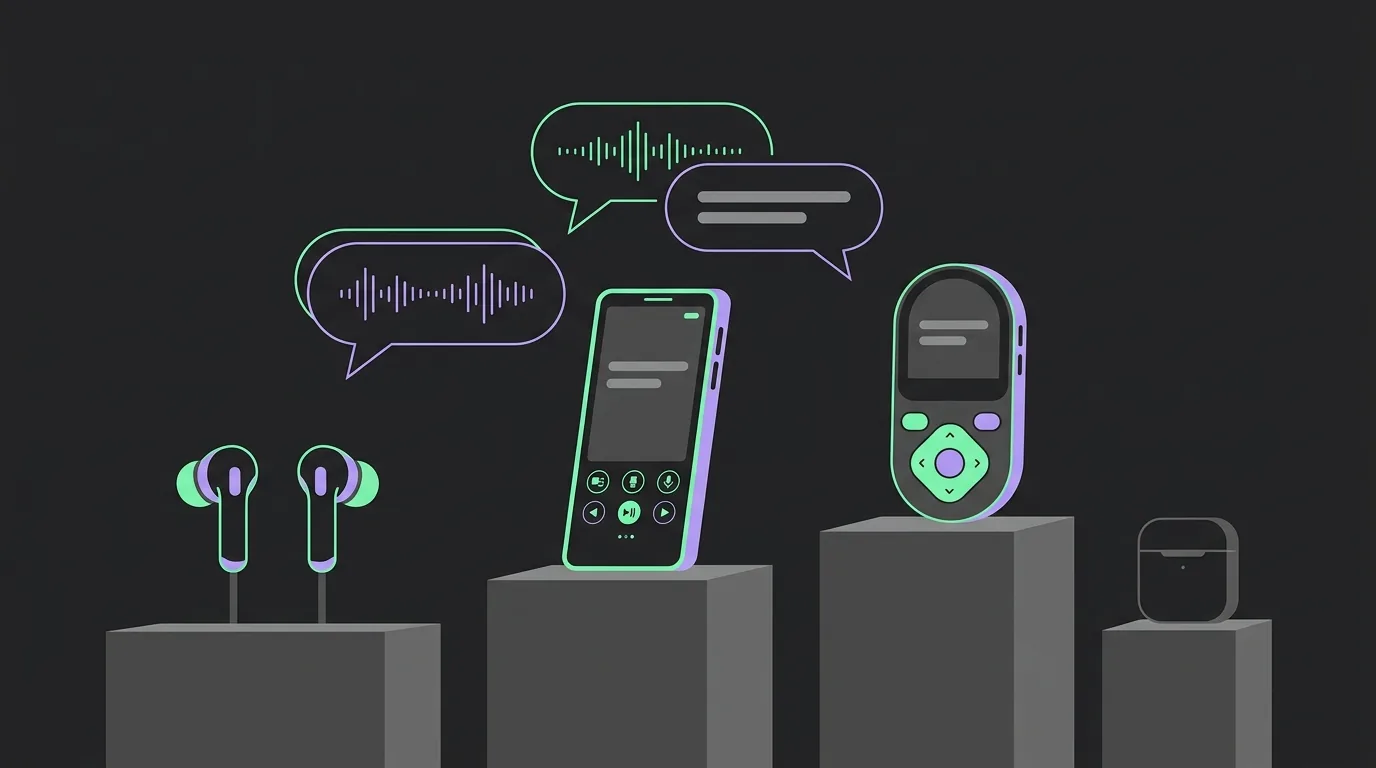
The three brands are not really competing for the same buyer, and the prices show it. Timekettle sells in-ear hardware for conversations you have face to face, with its flagship W4 Pro listed at $449 on its own store and a $119.99 entry model beneath it. Vasco sells a screen you hold, at $449 for the V4, and bundles the mobile data into the purchase price so there is nothing to top up abroad. Pocketalk sells the same handheld idea to organisations, from $299 for the S2 with a five year eSIM included. Choose on form factor and connectivity first, because on those two things they genuinely differ. Do not choose on advertised language counts, because each brand counts a different thing and calls it the same word.
Everything below was read on 28 August 2026 from each brand's own store or from an independent review platform. Where a figure would not load, the table says so rather than guessing. I sell a competing product, which I will get to at the end, so I have kept this to things you can go and check yourself in ten minutes.
What do these three brands each optimise for?
Timekettle optimises for hands-free conversation. Its main line is earbuds, and the whole design premise is that one bud goes in the other person's ear so neither of you is holding anything or waiting for a turn. The company sells that premise at several price points, from the M2 at $99.99 and the M3 at $119.99 up to the W4 Pro interpreter earbuds at $449. It also sells a handheld, the New T1, which the homepage advertises with 44 offline language packs, so the brand is not purely in-ear any more.
Vasco optimises for not thinking about connectivity. The Vasco Translator V4 product page lists the device at $449, and the brand's front page advertises unlimited data for translations in close to 200 countries with no monthly fee, described as free internet for life. That is the pitch. You buy the box, you land in a country you have never visited, you turn it on, it works. Vasco also sells earbuds, the E1, at $389 with 51 voice languages, so the brand crosses into Timekettle's territory at a similar price.
Pocketalk optimises for deployment. Read its store and the language is organisational: business bundles, lanyards, an administrative panel, a SIM sold on its own for $85. The consumer device is there, but the packaging around it is aimed at a hospital, a school district, or a hotel front desk buying twenty units. The five year eSIM baked into the purchase price is the same idea as Vasco's, sized to a procurement cycle rather than a holiday.
None of those three descriptions is a criticism. They are three different products that happen to share a category name.
How do their prices compare in 2026?
Here is the comparison, with every cell read on 28 August 2026 from the source named in the row.
| Brand | Representative product and published price | Form factor | Connectivity model | Stated languages and how they are counted | Public review signal, read 28 Aug 2026 |
|---|---|---|---|---|---|
| Timekettle | W4 Pro, $449.00 on timekettle.co. Entry models M3 $119.99, M2 $99.99 | In-ear, two buds, one for each speaker. Also sells a handheld (New T1) | Paired to your phone, translation runs in the cloud. Offline packs advertised on the handheld (44 packs) | W4 Pro description states "Support 52 Languages with 106 Accents", so languages and accents are counted separately | Trustpilot: 1.6 from 66 reviews. On-site product ratings on its own pages run far higher |
| Vasco | V4, $449 on vasco-translator.com. E1 earbuds, $389 | Handheld with a screen (V4). Earbuds sold separately (E1) | Mobile data included in the purchase price, advertised as free internet for life in close to 200 countries | V4 page gives three separate figures: 112 languages for photo, 107 for text, 82 for voice. E1 gives 51 for voice | Trustpilot: 3.9 from 179 reviews |
| Pocketalk | S2 with 5 year eSIM, $299.00. S2 Plus with 5 year eSIM, $349.00. Bundles to $394.00 | Handheld with a touchscreen | Five year eSIM included in the price. A standalone SIM is also sold at $85 | Marketing states "92+ languages" across voice and image translation, given as one combined figure | Trustpilot: 2.4 from 6 reviews, of which the page notes 1 in the last 12 months |
| AIEarbuds (ours) | $69 kit. AI Translation Live software, $39 a year, 5 hours included | In-ear | Runs in your browser against a cloud model. No included data plan | Output language list is published on our home page and enumerated from the translation API itself, not from a spec sheet | No independent review profile yet. We are a new store and I am not going to pretend otherwise |
Two things stand out from that grid. First, the top of each brand's range converges near $449, which suggests the ceiling is set by what buyers will pay rather than by what the hardware costs. Second, the cheapest way into each brand is wildly different: $99.99 for a Timekettle M2, versus $389 for the cheapest Vasco I could find a price for, versus $299 for the cheapest Pocketalk with the eSIM. If your budget is the constraint, that difference matters more than any spec on the box.
One caveat on the Timekettle prices. Its store renders prices through JavaScript, so the pages themselves would not show a figure to a plain fetch. The $449.00, $119.99 and $99.99 above come from Timekettle's own store data for those products, read the same day. If you see a sale price when you visit, that is the discount running that week, not a contradiction.
How does each one count languages?
This is the part of the category that quietly misleads people, and it is the reason I put a whole column on it.
Vasco is the most transparent of the three, probably by accident. Its V4 page splits the number three ways: 112 languages for photo translation, 107 for text, 82 for voice. Voice is the one that matters for a conversation, and it is the smallest of the three. A shopper who remembers "112 languages" has remembered the number for pointing a camera at a menu.
Timekettle publishes 52 languages with 106 accents for the W4 Pro. Counting accents separately is defensible engineering, because a model tuned for Mexican Spanish really does behave differently from one tuned for Castilian. It also means the largest number on the page is not a language count at all.
Pocketalk gives one figure, 92 or more languages, spanning voice and image together. That is the least granular of the three, and it is the hardest to check against what you will actually be able to speak.
The takeaway is not that anyone is lying. It is that a language count is a marketing figure derived from a technical one, and the derivation is different in each case. The only number worth comparing is the count of languages the device will speak out loud, and two of the three brands make you dig for it. I went through the mechanics of why these lists differ at all in how translation earbuds actually work, and the same logic applies to a handheld: the box is a microphone and a speaker, and the list belongs to whichever model is doing the translating.
Handheld screen or in-ear: which suits your situation?
The form factor decision is the one most people get wrong, and it has almost nothing to do with brand.
A handheld with a screen wins when the other person is a stranger you will speak to once. You hold it out, they speak into it, they read the screen. There is no hygiene question, no explaining what the object in your hand is, no asking a shopkeeper to put something in their ear. It also wins when text matters, because a screen shows you what it heard, which is how you catch the misrecognition that would otherwise send the conversation sideways. Both Vasco and Pocketalk are built around this.
Earbuds win when the conversation is long and reciprocal. A forty minute meeting, a dinner, a working day alongside a colleague. Passing a screen back and forth twice a minute for forty minutes is exhausting in a way that five minutes at a hotel desk never reveals. Timekettle has been building for that case longer than anyone, which is what the $449 buys.
The honest test is to count your longest likely conversation. Under five minutes, buy a screen. Over twenty minutes, buy buds. In between, buy whichever you will actually carry.
What does public review sentiment show?
Carefully, and with the sample sizes attached, because this is where comparison articles usually get unfair.
On the day I checked, Trustpilot's profile for Vasco showed 3.9 from 179 reviews. Trustpilot's profile for Timekettle showed 1.6 from 66 reviews. Pocketalk's profile showed 2.4 from 6 reviews, and the page itself flags that only one of those arrived in the last twelve months.
Three things are worth saying before anyone draws a conclusion from that. Trustpilot is a place people go when something went wrong, so absolute scores across the whole platform skew low and a translator brand's score there is not a product quality rating. Six reviews is not a sample, so Pocketalk's 2.4 tells you close to nothing. And Timekettle's own product pages carry on-site star ratings that run far higher than its Trustpilot score, which is normal for any brand hosting its own reviews and is not evidence of anything either way.
What the numbers do support is narrower and more useful: Vasco has the largest independent public review base of the three, and the largest base is the one where a pattern would show up first. If you are the kind of buyer who reads reviews before spending $400, Vasco is currently the only one of the three with enough of them on a neutral platform to be worth reading.
Where does a $69 kit fit against them?
Below all of them, deliberately, and not as a replacement for any of them.
If your conversations are long, in-ear, and frequent, buy the Timekettle. If you want to land anywhere and have it work with no SIM decision, buy the Vasco. If you are equipping a front desk or a ward, Pocketalk built its store for you.
Our kit is for the fourth buyer, the one those three brands price out. It is $69 for the earbuds, and AI Translation Live is $39 a year with 5 hours of live translation included. The software is priced separately on purpose. That is the whole argument of this site: the hardware in this category is a commodity, the translation is the product, and a single number on a box hides which of the two you are actually paying for. Our output language list is published on the home page and comes from the translation API itself rather than from a supplier's spec sheet, which is why it does not match the bigger number the same hardware is advertised with elsewhere.
The honest limits, stated plainly. There is no included data plan, so you need a connection. Five hours a year is a travel allowance, not a working interpreter's allowance, and if you will be translating for hours every week the per-minute economics of the premium brands stop looking expensive. I put a three year cost ledger against those brands in what translation earbud subscriptions really cost, and our own per-minute cost is in it.
If you want the wider field rather than these three, the honest comparison of translation earbuds covers it, ours included and placed where it belongs. Or you can just hear our translation running in your browser before you spend anything, which is the fastest way to find out whether this category solves your problem at all.
Frequently asked questions
Is Timekettle better than Pocketalk?
They are better at different things, and the honest answer depends on your form factor. Timekettle's line is built around earbuds for long two way conversations, with the W4 Pro at $449 and cheaper models from $99.99. Pocketalk is a handheld with a screen, from $299 with a five year eSIM included, and is sold heavily into organisations. For a forty minute meeting, Timekettle's shape is right. For a hotel desk, a clinic, or any one off exchange with a stranger, the screen is right. Neither wins on price at both ends of its range.
Is a Vasco translator worth the price?
At $449 for the V4, the thing you are paying extra for is the included mobile data, advertised as covering close to 200 countries with no monthly fee. If you travel to places where getting a working data connection is genuinely annoying, that is worth real money and it is the clearest justification for the price in this comparison. If you mostly translate at home, on hotel wifi, or somewhere your phone already has data, you are paying for a feature you will not use. Vasco also carries the largest independent public review base of the three brands here, which is worth something on a purchase this size.
Do I need a dedicated translator device at all?
Often not. If your phone has a connection and your hands are free, a phone app does the same job for nothing, and I would rather you found that out here than after spending $400. A dedicated device earns its place in three situations: when you need one earpiece in another person's ear, when you need a screen to hand to a stranger, or when you need it to work with no connectivity decision on arrival. If none of those three describes you, keep your money.
Which translator brand has the best support?
Nothing published lets me answer that fairly, so I will not pretend otherwise. What is observable is the shape of each brand's after sale offer. Timekettle sells extended care plans openly on its store, priced per product, from $15 for the M3 up to $112 for lifetime cover on the W4 Pro. Vasco and Pocketalk fold their connectivity commitment into the purchase price instead, five years in Pocketalk's case. Those are different promises, not better or worse ones, and a warranty page is not a measure of how a company behaves when your device fails. The largest neutral review base is Vasco's, so that is where you would see a support pattern emerge first.