Do Translation Earbuds Work? An Honest Answer
By Mark Fulton · August 12, 2026
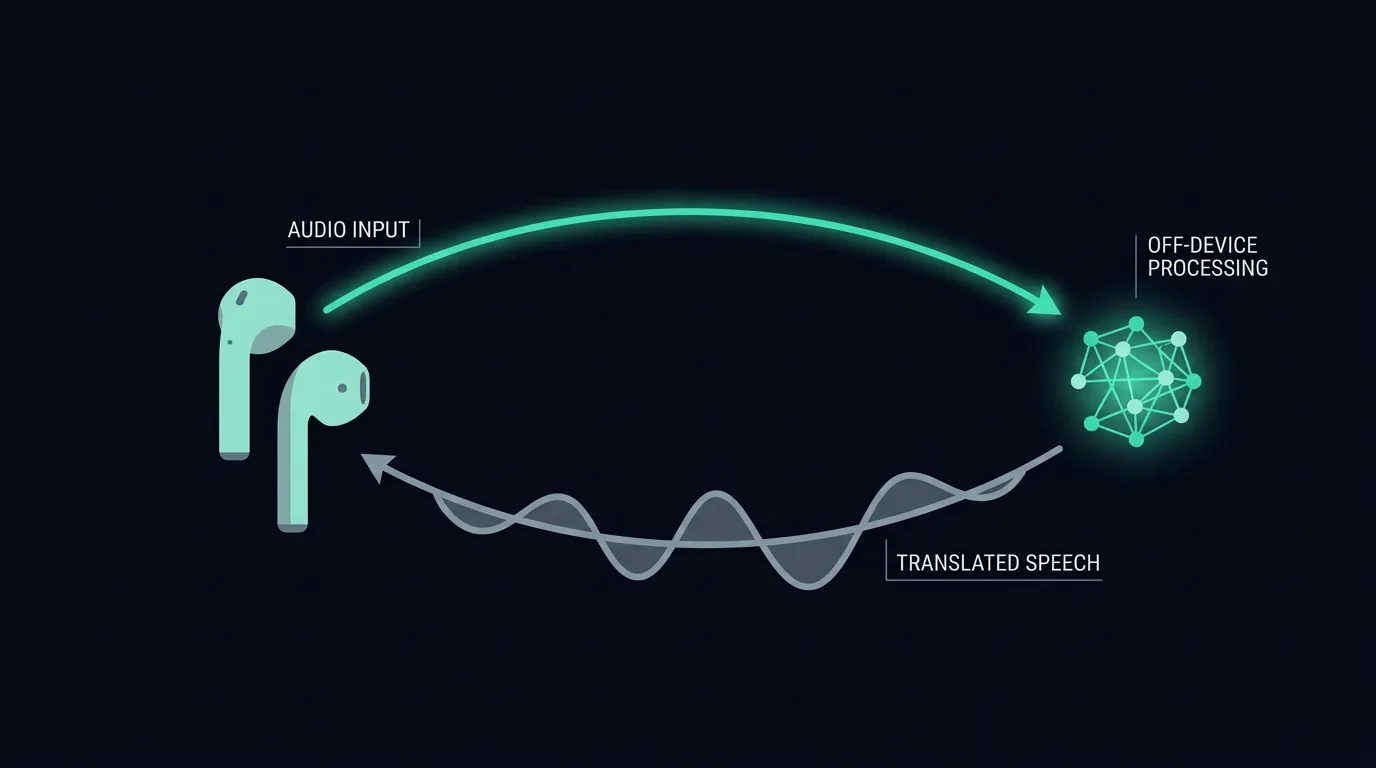
Yes, translation earbuds work — but not in the way the box implies, and not for every conversation. The earbuds themselves are a microphone and a speaker; the translation happens on your phone or in a data centre. So "do they work?" is really two questions: is the software driving them any good, and is the conversation you're pointing it at one that machine translation can carry? For a transactional exchange in a quiet room — buying a ticket, checking into a hotel, asking directions — a decent pair works well. For a fast, overlapping, high-stakes conversation in a loud restaurant, it will not, no matter which brand you buy.
I sell a translation earbud kit, so read the rest of this with that in mind. I'm writing it anyway, because the split between hardware and software is the entire reason my software is priced separately from the plastic — and because every page that currently ranks for this question is written by someone who sells the hardware and needs the answer to be an unqualified yes.
Here's the odd thing about this search result. The page sitting at the top on the day I wrote this isn't a product page or a review. It's a forum thread of ESL teachers saying they bought a pair and it didn't do what they expected. That gap — between the marketing answer and the buyer's answer — is what this post is trying to close.
What is actually inside a pair of translation earbuds?
Open up any consumer set under a few hundred dollars and you'll find the same parts as any other cheap true-wireless earbuds: a Bluetooth radio, a small driver, one or two MEMS microphones, a battery, and a controller chip.
There is no translation in there. There is no room for it. The controller has nowhere near the compute to run speech recognition, let alone a translation model, and even if it did, the power budget of a cell that size would be gone in minutes.
What you're buying, physically, is a wireless microphone that sits close to a mouth and a speaker that sits inside an ear. That's a genuinely useful pair of properties — a mic near your face hears you better than a phone on a table, and audio in your ear doesn't have to compete with the room — but it's the whole hardware contribution. I've written the longer version of this teardown in how translation earbuds actually work, including where the language counts on the listings come from.
Where does the translation really happen?
In an app on your phone, or in a cloud service that app calls. Usually the latter.
The pipeline has four stages, and each one is a separate piece of software that can be good or bad independently:
- Capture. The mic picks up speech and the app decides when a turn has ended.
- Recognition. A speech model turns that audio into text in the source language.
- Translation. A translation model turns that text into the target language.
- Synthesis. A text-to-speech model says it out loud in your ear.
Every failure you'll ever experience happens in one of those four stages, and stage two is the one that hurts most. If the recogniser mishears "I'm allergic to peanuts" as "I'm a lurgy to pee nuts," a perfect translation model downstream will confidently translate the nonsense. The output sounds fluent and is wrong, which is worse than sounding broken.
Splitting the work this way isn't a scandal — it's the right engineering call. You get a better model, updated continuously, without carrying it on your head. The problem is that listings describe the split as though the intelligence lives in the earbuds, so buyers evaluate the wrong half.
If you want a sense of how fast this can get, Google Research published a write-up of an end-to-end streaming speech-to-speech translation model that describes a standard two-second delay as suitable for real-time conversation, against the four-to-five seconds that older staged systems typically incurred. Compare that with the vendor claims in this category: one manufacturer's own explainer states roughly half a second and 96% accuracy across 51 languages. Those numbers are measuring different things, under conditions nobody publishes, which is why you should treat a latency figure on a product page as a marketing unit rather than a spec.
What kinds of conversation do they handle well?
Machine translation is strongest where language is most predictable, and conversations differ enormously in how predictable they are.
They work well when:
- One person speaks at a time, in complete sentences, with a beat of silence at the end.
- The vocabulary is ordinary — food, directions, times, prices, symptoms, arrangements.
- The stakes are recoverable. If it garbles something, you can say it again.
- The room is quiet enough that you'd have no trouble hearing an unfamiliar accent.
- The language pair is a common one with a lot of training data behind it.
They struggle when:
- Two people overlap, or a third joins in.
- Speech is elliptical — half-sentences, trailing off, "yeah, no, the other one."
- Proper nouns, street names, brand names and numbers carry the meaning.
- Humour, sarcasm, idiom or politeness register is the actual content of the sentence.
- The language is one with less data behind it. NIST's OpenASR challenge exists specifically because recognition accuracy for low-resource languages remains a hard, measurable, unsolved problem — and recognition is stage two.
Will they work for your situation? A decision tree
Work down this from the top. Answer honestly about the conversation you actually need help with, not the one you imagine.
1. What kind of conversation is it?
- Transactional — ordering, buying, checking in, asking directions, short questions with short answers. → Go to 2.
- Social — a meal with someone's family, a long chat with a colleague, small talk that goes somewhere. → Go to 2, but expect to work at it.
- High-stakes — anything binding, clinical, legal, financial, or safety-critical. → Stop. Don't rely on a device. Skip to the "when should you not use them" section below.
2. How loud is the room?
- Quiet — a hotel lobby, an office, a shop, a taxi with the window up. → Go to 3.
- Moderate — a busy street, a café with music, a train carriage. → Workable, with effort. Get closer, speak in shorter turns, expect to repeat yourself. Go to 3.
- Loud — a bar, a market, a restaurant at peak, a platform with announcements. → This is where the category actually fails. The recogniser is fighting the room before translation is even involved. Switch to typing on a screen and showing it, or step outside for the sentence that matters.
3. Can both of you have audio?
- Yes — one earbud each, or you each have a device. → Best case. This is where earbuds genuinely beat a phone: eye contact, hands free, no object held between two faces.
- No — but you can use a speaker. → Still fine for transactional exchanges. You lose the hands-free benefit and privacy; a phone app does most of this for free. Ask yourself whether the earbuds are earning their place.
- No — and it's a stranger you'd feel odd offering an earbud to. → Be realistic that you're buying a one-directional tool: it translates them into your ear, and you speak out loud to a speaker or a screen.
Quick read of the same tree:
| Situation | Verdict |
|---|---|
| Transactional, quiet, one earbud each | Works well |
| Transactional, quiet, speaker handoff | Works; a free phone app may be enough |
| Social, moderate noise, one earbud each | Works with effort and repetition |
| Any type, loud room | Expect failure; switch to text on screen |
| High-stakes, any room | Use a professional interpreter |
What reliably breaks them?
Five things, in roughly the order you'll meet them:
Background noise. Not because it makes the translation worse directly, but because it makes the transcript worse, and everything downstream inherits that. This is why a quiet-room demo tells you almost nothing about a restaurant.
Overlapping speakers. Almost all of these products assume a turn-taking model. Two voices at once produces one garbled turn, not two clean ones.
Proper nouns and numbers. Names of places, people, dishes and medicines are exactly the words with the least context to disambiguate them, and they're often the words that matter most in the sentence.
Connectivity. Nearly every product in this category needs a data connection for its good mode. Mid-conversation signal loss is the failure mode travellers report most, and the offline fallback — where one exists — runs a much smaller model.
The delay itself. Even a fast system inserts a pause where a conversation expects a response. People fill that pause by talking again, which creates overlap, which breaks the turn. Learning to wait is a skill, and it's most of the difference between people who say these work and people who say they don't.
When should you not use them at all?
I'd rather lose the sale than have someone use this badly, so plainly:
- Anything clinical. Diagnoses, consent, medication instructions, symptoms in a language you don't share. Ask the facility for a qualified interpreter.
- Anything legal or binding. Contracts, statements, police interactions, tenancy, immigration.
- Anything safety-critical. Site instructions, machinery, emergency procedure.
- Anything where the other person hasn't agreed to it. Ask before you put a microphone in a conversation.
The test the US Department of Justice applies to communication aids under the ADA's effective-communication guidance is a useful one to borrow even though it's about disability access rather than language: weigh the nature, length, complexity and context of the communication. Simple and short, an aid is fine. Complex, long, and consequential, you need a qualified human. That's the same line I'd draw here.
For anything in the middle — a business conversation that isn't binding — use the device to have the conversation and then confirm the specifics in writing, in both languages, before anyone acts on them.
How do you test a pair before you trust it?
Do this before the trip, not at the counter:
- Test the language pair you actually need. A flawless English↔Spanish demo tells you nothing about English↔Thai. If you can't test your pair before buying, that's the thing to ask about.
- Test it in the room type you'll use it in. Do the same three sentences in your kitchen and then on a busy street. The delta is your real answer.
- Say something with a number, a name and a date in it. "Can we move Tuesday's booking for four people to the restaurant on Rua Augusta?" is a better test than "where is the train station."
- Time the delay with a stopwatch, from the moment the other person stops speaking to the moment you understand them. Then decide whether you can hold a conversation with that gap in it.
- Deliberately break it. Talk over the other person. Trail off mid-sentence. See what it does — because that's what a real conversation does.
- Turn the connection off and find out what's left.
You can run that whole checklist on the live demo on this site without buying anything or creating an account: speak once, hear it come back translated, and judge the delay with your own ears rather than reading a number about it. That's the honest order of operations — try the software first, then decide whether you want hardware to carry it. If you do, the kit is $69 and AI Translation Live is $39 a year, both stated up front.
FAQ
Do translation earbuds work without a phone?
Mostly, no. Consumer earbuds under a few hundred dollars have no translation capability of their own and need a paired phone running the vendor's app, which in turn usually needs a data connection. Standalone handheld translators with their own screen and SIM do exist — that's a large part of what the premium tier is charging for, where published list prices run up to around $449. Our own setup runs in a browser rather than an installed app, which means a phone or a laptop works equally well, but it's still a second device doing the thinking.
Are translation earbuds accurate enough for business?
For rapport, status updates and general discussion, usually yes, with the caveat that you should confirm anything specific in writing afterwards. For anything binding — pricing, terms, commitments, contracts — no. Not because the technology is bad, but because a fluent-sounding mistranslation of a number or a condition is very hard to catch in the moment, and the cost of catching it late is much higher than an interpreter's fee. Treat vendor accuracy percentages sceptically in either direction: figures like "96%" or "98%" appear on product pages across this category with no published test set, no language list, and no noise condition attached.
Do cheap translation earbuds work as well as expensive ones?
At the budget end, you are largely buying the same class of hardware from the same handful of factories — the physical difference between a $22 pair and a $99 pair is smaller than the price gap suggests. What genuinely differs is the software attached to it: which translation service it calls, how it handles turn-taking, whether it streams or waits for a full sentence, whether it's still updated in a year, and whether anyone answers when it breaks. That's why I price the earbuds and the software separately instead of quoting one number and letting you guess how it splits. The premium tier is buying something real too — standalone hardware, better mic arrays, offline packs — it's just not buying a categorically better translation model.
Can both people hear the translation?
It depends on the mode, and vendors use "two-way" to mean at least three different things. One earbud each is the version that actually feels like a conversation, and it requires the other person to be willing to put your earbud in their ear. A speaker handoff — your earbud translates them into your ear, your reply plays out loud from the phone — needs no cooperation and works with strangers, but you lose the hands-free benefit. Simultaneous mode, where both people wear a full set and neither waits, generally needs two pairs and is the most expensive configuration. Work out which one your actual situation allows before you pay for a capability you can't use.